
Introduction: Why Regular Deep Cleaning is Essential for Your Fish Tank
Keeping your fish tank clean is essential not only for the health of your fish but also for maintaining the aesthetic appeal of your aquarium. Over time, algae, debris, and waste accumulate in the tank, affecting both water quality and the overall environment of your aquatic pets. While regular maintenance, such as spot cleaning and water changes, is important, a deep clean ensures that your aquarium is in top condition and free from harmful buildup.
If you’re short on time and want to perform a thorough cleaning, don’t worry – it’s possible to deep clean your fish tank in one hour or less! This guide will walk you through a quick and effective step-by-step process to deep clean your aquarium, ensuring your fish live in a clean, healthy environment.
Supplies You’ll Need to Deep Clean Your Fish Aquarium
Before starting, gather all the necessary tools and supplies for the cleaning process:
- Algae scraper or sponge
- Gravel vacuum or siphon
- Bucket (for removing water)
- Aquarium-safe glass cleaner (or vinegar solution)
- Aquarium-safe sponge or soft cloth
- Water conditioner (for treating new water)
- Fishnet (for removing your fish, if necessary)
- Replacement filter cartridge (if applicable)
Step-by-Step Guide to Deep Cleaning Your Aquarium in One Hour or Less
Step 1: Prepare for Cleaning (5 Minutes)
Before diving into cleaning, ensure you have all the necessary tools and supplies nearby. You’ll want to avoid interruptions during the process, so preparing in advance will help you stay on track.
- Turn off all equipment: Unplug your aquarium filter, heater, and any other electronic equipment to ensure safety during the cleaning process.
- Remove your fish (optional): If your fish are particularly sensitive or you prefer to relocate them temporarily, use a fishnet to gently transfer them into a temporary holding container with water from the aquarium.
Step 2: Clean the Glass and Decorations (10 Minutes)
The first step in deep cleaning is to remove any visible algae or buildup from the glass and decorations. This will improve the clarity of the water and make the tank look cleaner.
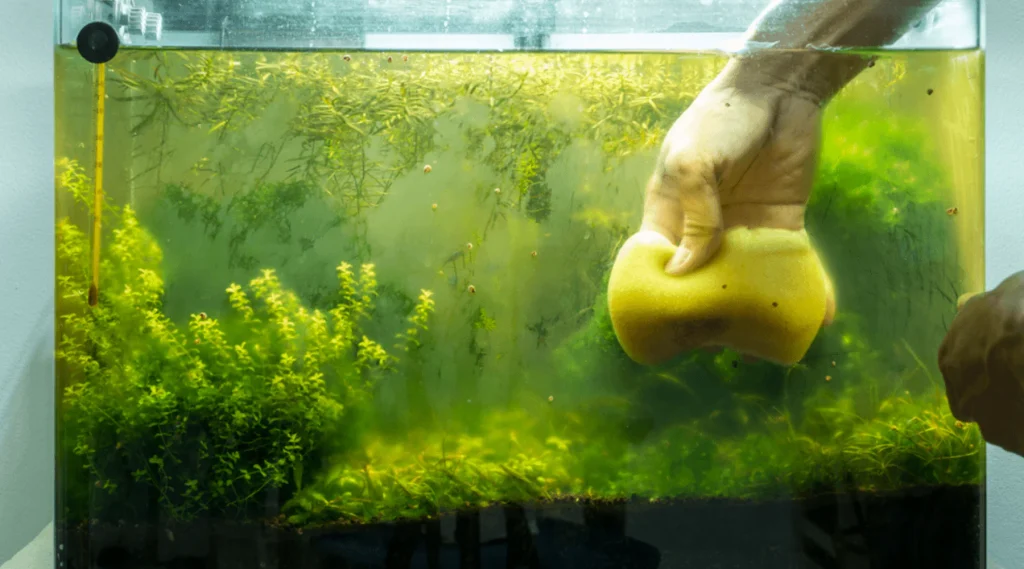
- Scrub the glass: Use an algae scraper or a clean sponge to gently scrub the interior glass of the tank, especially the areas where algae has accumulated. Be sure to clean all sides of the glass, including the corners and bottom of the tank.
- Clean decorations and rocks: Take out any ornaments, rocks, or other decorations and rinse them thoroughly in aquarium-safe water. Avoid using soap or chemicals, as they can harm your fish. If needed, use a soft brush to scrub away stubborn algae.
Step 3: Siphon the Gravel (15 Minutes)
Siphoning the gravel is one of the most important steps in deep cleaning your aquarium. This process will remove any uneaten food, fish waste, and debris from the substrate.
- Start siphoning: Place the siphon or gravel vacuum into the tank and start sucking up debris from the gravel. Move the vacuum through the gravel in slow, circular motions to ensure you reach all areas.
- Change 25-30% of the water: While siphoning the gravel, remove approximately 25-30% of the water. This helps eliminate organic waste and refresh the water in the tank. Make sure to collect the waste water in a bucket, and discard it in a safe place.
Step 4: Clean the Filter (10 Minutes)
Cleaning your filter ensures that it’s functioning properly and maintaining good water quality. Depending on the type of filter you use, cleaning may be a simple process or require more attention.
- Turn off and disassemble the filter: Carefully remove the filter from the tank, ensuring that it is turned off and unplugged. If you have a hang-on-back filter or canister filter, follow the manufacturer’s instructions for disassembly.
- Rinse the filter media: Gently rinse the filter media (sponges, bio-balls, or ceramic rings) in aquarium water, not tap water, to preserve beneficial bacteria. If the filter cartridge is old or clogged, replace it with a new one.
- Clean the filter housing: Wipe down the exterior of the filter housing with a soft cloth to remove dirt and debris. Make sure the filter is reassembled and securely placed back into the tank.
Step 5: Perform a Water Change (10 Minutes)
After cleaning the tank, you’ll need to refill the aquarium with fresh water to replace the water you removed during the gravel vacuuming process.
- Prepare new water: Fill a bucket with dechlorinated water that is the same temperature as the tank water. You can use a water conditioner to remove chlorine and other harmful chemicals from tap water.
- Slowly add the new water: Pour the new water slowly into the tank, preferably into a plate or shallow dish to avoid disturbing the substrate or decorations. Ensure the water level is appropriate for your tank and that the temperature matches the tank’s current level.
Step 6: Clean the Exterior of the Tank (5 Minutes)
Now that the inside of the tank is clean, it’s time to clean the exterior and ensure the entire tank looks sparkling.
- Wipe the glass: Use a soft cloth or aquarium-safe glass cleaner to wipe down the outside of the tank. Clean the lid, the sides, and the top of the aquarium to remove fingerprints, dust, or watermarks.
- Clean the equipment: Wipe down any external equipment, such as the light fixture, thermometer, and cords.
Step 7: Reintroduce Your Fish (5 Minutes)
Once your tank is thoroughly cleaned and refilled with fresh water, you can safely return your fish to their habitat.
- Acclimate your fish: If your fish were temporarily relocated, ensure they are acclimated to the new water conditions by slowly introducing them back into the tank. Gently add some of the tank water into their temporary container to help them adjust.
- Observe your fish: Keep an eye on your fish for a while to make sure they are adjusting well and that the water quality is suitable for their health.
Bonus Tips for Efficient Cleaning:
- Use a tank vacuum: A tank vacuum is a great tool for cleaning large aquariums quickly and efficiently. These devices help remove debris without disturbing your substrate too much.
- Clean filters regularly: To minimize the amount of buildup in your aquarium, clean your filter regularly (every 2-4 weeks) to maintain water quality.
- Regular spot cleaning: Perform spot cleaning every few days to remove uneaten food, waste, or algae buildup. This will reduce the amount of debris that accumulates between deep cleanings.
Conclusion: Enjoy a Clean and Healthy Aquarium in Just One Hour
A deep clean is essential for maintaining a healthy and beautiful aquarium, but it doesn’t have to take all day. By following this step-by-step guide, you can complete a thorough cleaning in one hour or less, keeping your tank and fish in top condition. Regular maintenance, including weekly water changes and filter cleaning, will keep your aquarium in great shape between deep cleans.
A clean aquarium contributes to better water quality, happier fish, and a more enjoyable tank for both you and your aquatic pets. So, get ready to give your fish the clean and healthy environment they deserve!